
It aims to improve effective communication and collaboration among household members in meal planning, organization, and grocery shopping, leading the researchers to focus the design problem on how to present information to motivate better collaboration in managing groceries.
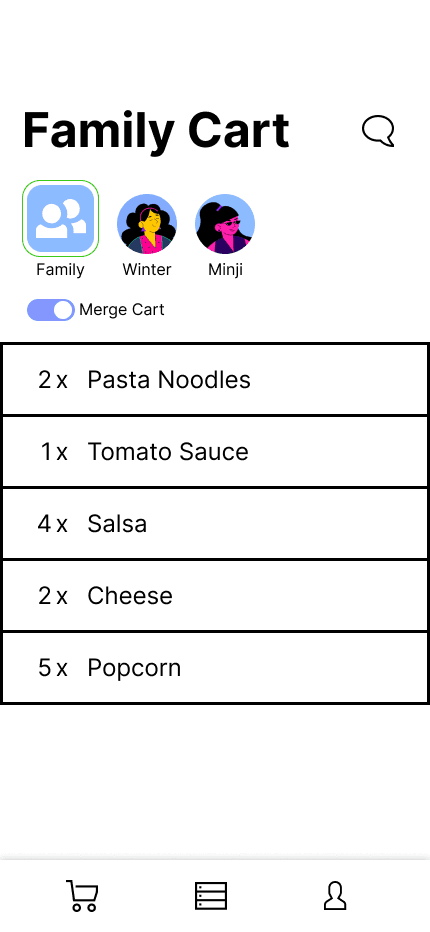
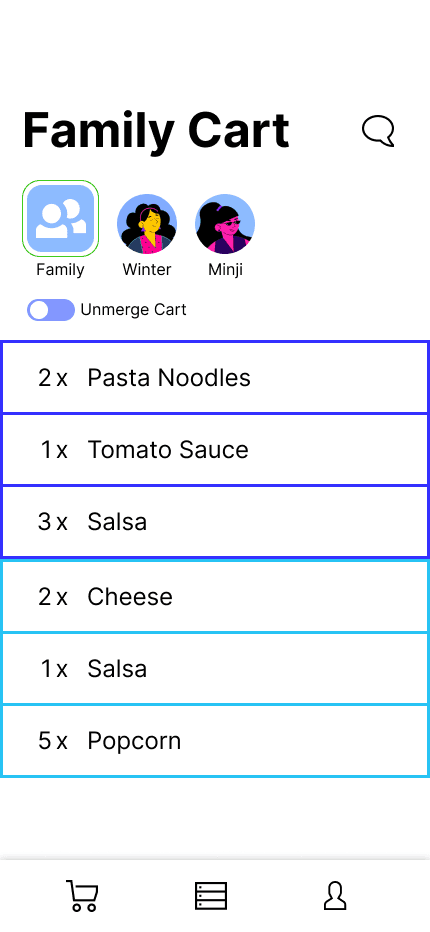
Participants reported considering several factors when deciding what food items to buy, including. These factors shaped purchasing decisions and could indirectly influence the likelihood of food waste.
With this in mind, the design was focused on presenting the needs and wants of each household member to encourage better collaboration in managing groceries.
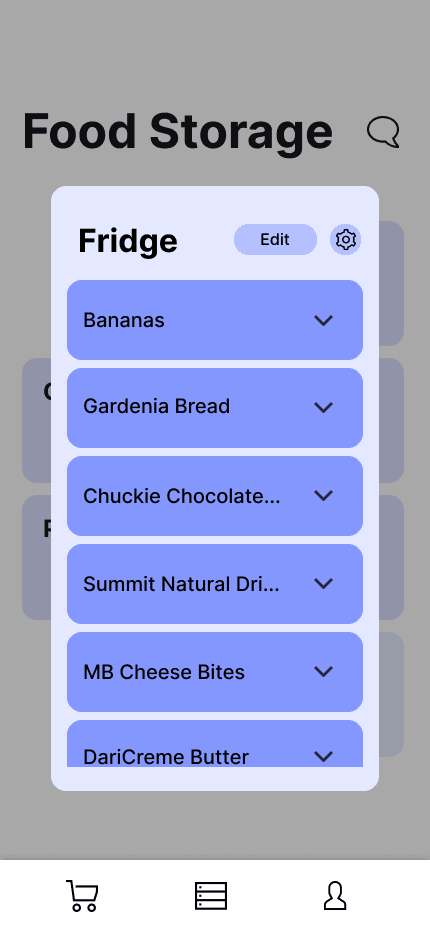
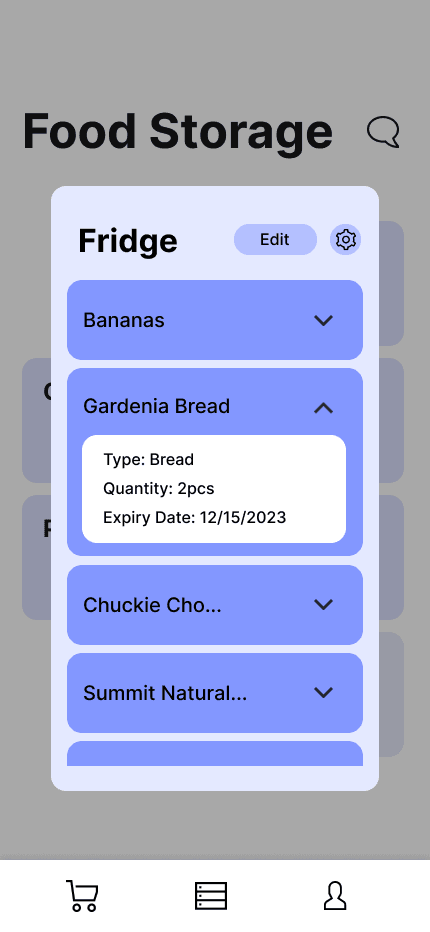
Most participants organized groceries by category (e.g., vegetables, frozen goods, canned items), making them easier to find and keeping storage spaces orderly. Some also prioritized using older stock before newer items to reduce waste, though this required consistent effort and coordination within the household.
With this in mind, the design was focused on centralizing current stock to make it easier to find and use.
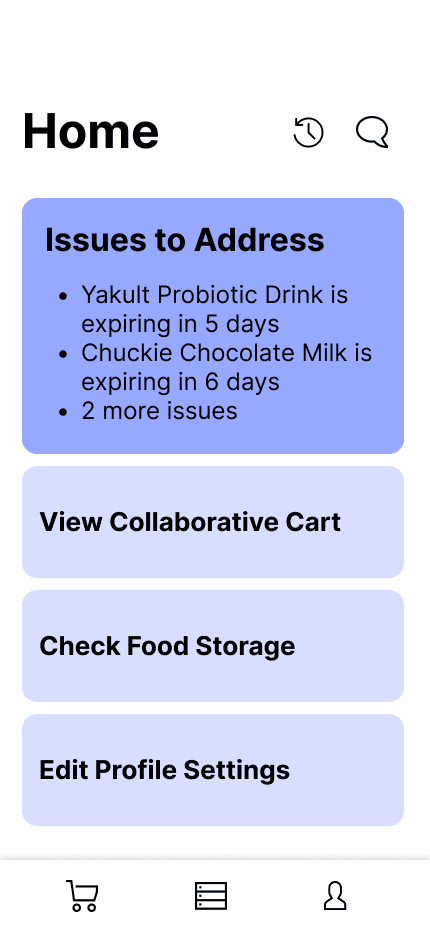
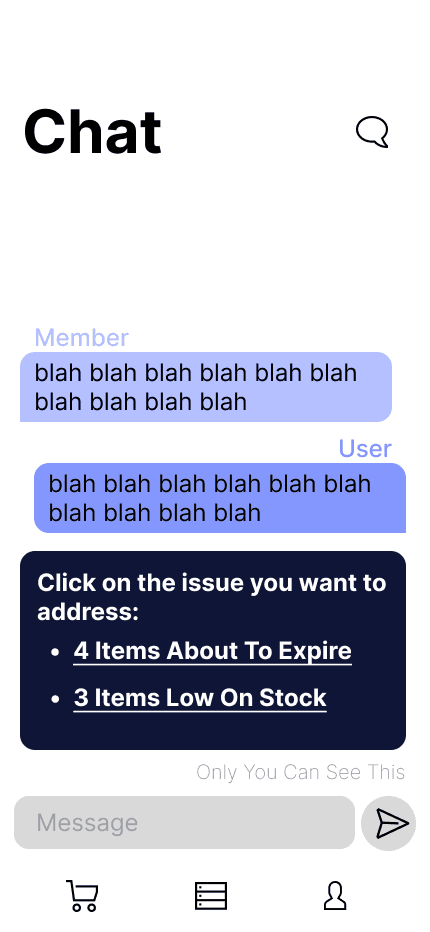
Participants also reported forgetting about stored items leading to food waste.
With this in mind, the design was focused on presenting the items in the home page to make it easier to remember and use. Moreover, household members can also communicate with each other and bring up the items that are about to expire and other issues related to the groceries.